Featured
Table of Contents
In 2026, the most successful start-ups use a barbell technique for customer acquisition. On one end, they have high-volume, low-intent channels (like social media) that drive awareness at a low cost. On the other end, they have high-intent, high-cost channels (like specialized search or outbound sales) that drive high-value conversions.
The burn several is a vital KPI that measures how much you are spending to produce each brand-new dollar of ARR. A burn multiple of 1.0 means you spend $1 to get $1 of brand-new income. In 2026, a burn multiple above 2.0 is an immediate warning for investors.
Optimizing Modern Sales Funnel in 2026Pricing is not just a monetary decision; it is a strategic one. Scalable startups often use "Value-Based Pricing" rather than "Cost-Plus" models. This indicates your rate is connected to the amount of money you conserve or produce your consumer. If your AI-native platform saves an enterprise $1M in labor expenses yearly, a $100k annual membership is a simple sell, despite your internal overhead.
Optimizing Modern Sales Funnel in 2026The most scalable service concepts in the AI space are those that move beyond "LLM-wrappers" and construct exclusive "Inference Moats." This means using AI not simply to create text, however to enhance intricate workflows, forecast market shifts, and deliver a user experience that would be impossible with traditional software application. The increase of agentic AIautonomous systems that can perform complex, multi-step taskshas opened a brand-new frontier for scalability.
From automated procurement to AI-driven project coordination, these representatives enable a business to scale its operations without a corresponding boost in operational intricacy. Scalability in AI-native startups is typically a result of the information flywheel effect. As more users engage with the platform, the system gathers more exclusive data, which is then used to improve the models, causing a much better product, which in turn draws in more users.
Proven Methods for Fast-Track Sales by 2026
When evaluating AI startup growth guides, the data-flywheel is the most pointed out factor for long-term viability. Reasoning Advantage: Does your system become more accurate or effective as more data is processed? Workflow Combination: Is the AI embedded in a way that is important to the user's daily tasks? Capital Effectiveness: Is your burn numerous under 1.5 while keeping a high YoY growth rate? Among the most common failure points for startups is the "Performance Marketing Trap." This takes place when a service depends entirely on paid ads to acquire brand-new users.
Scalable company concepts prevent this trap by developing systemic distribution moats. Product-led development is a technique where the product itself serves as the main driver of client acquisition, expansion, and retention. When your users end up being an active part of your product's development and promo, your LTV boosts while your CAC drops, producing a formidable economic advantage.
Maximizing AEO Performance in B2B Markets
For example, a startup constructing a specialized app for e-commerce can scale quickly by partnering with a platform like Shopify. By incorporating into an existing community, you acquire instant access to a huge audience of prospective consumers, substantially reducing your time-to-market. Technical scalability is typically misunderstood as a purely engineering problem.
A scalable technical stack permits you to deliver features quicker, keep high uptime, and reduce the cost of serving each user as you grow. In 2026, the standard for technical scalability is a cloud-native, serverless architecture. This approach enables a start-up to pay just for the resources they utilize, ensuring that facilities expenses scale perfectly with user need.
For more on this, see our guide on tech stack tricks for scalable platforms. A scalable platform ought to be built with "Micro-services" or a modular architecture. This permits different parts of the system to be scaled or upgraded independently without affecting the whole application. While this adds some preliminary complexity, it prevents the "Monolith Collapse" that frequently occurs when a startup attempts to pivot or scale a stiff, legacy codebase.
This exceeds simply composing code; it includes automating the testing, release, tracking, and even the "Self-Healing" of the technical environment. When your facilities can automatically discover and fix a failure point before a user ever notices, you have reached a level of technical maturity that allows for really international scale.

Maximizing SEO Performance for B2B Markets
A scalable technical foundation includes automated "Design Monitoring" and "Continuous Fine-Tuning" pipelines that ensure your AI stays precise and effective regardless of the volume of demands. By processing information closer to the user at the "Edge" of the network, you decrease latency and lower the concern on your main cloud servers.
You can not handle what you can not measure. Every scalable company idea need to be backed by a clear set of performance signs that track both the existing health and the future capacity of the endeavor. At Presta, we help founders develop a "Success Control panel" that concentrates on the metrics that actually matter for scaling.
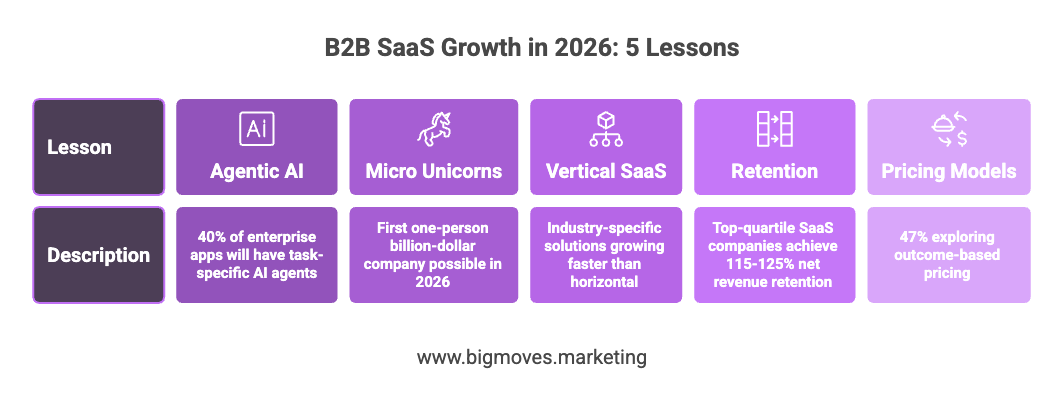
By day 60, you must be seeing the first indications of Retention Trends and Payback Duration Reasoning. By day 90, a scalable start-up needs to have sufficient data to prove its Core System Economics and justify more investment in growth. Income Development: Target of 100% to 200% YoY for early-stage endeavors.
Growing Enterprise Platforms for the Future
NRR (Net Revenue Retention): Target of 115%+ for B2B SaaS models. Guideline of 50+: Combined development and margin percentage need to exceed 50%. AI Operational Take advantage of: At least 15% of margin enhancement must be straight attributable to AI automation.
The primary differentiator is the "Operating Take advantage of" of the organization model. In a scalable service, the minimal expense of serving each new client decreases as the business grows, resulting in expanding margins and greater profitability. No, numerous startups are in fact "Lifestyle Organizations" or service-oriented models that lack the structural moats required for real scalability.
Scalability requires a particular positioning of innovation, economics, and circulation that permits the organization to grow without being restricted by human labor or physical resources. You can validate scalability by carrying out a "System Economics Triage" on your idea. Determine your predicted CAC (Customer Acquisition Expense) and LTV (Life Time Value). If your LTV is at least 3x your CAC, and your repayment period is under 12 months, you have a foundation for scalability.

Latest Posts
Navigating the Ranking Factors of the 2026 Web
Developing Responsive Applications Using Modern Frameworks
Growing B2B Platforms in 2026